The operating system for wholesale distribution
Everything you run, in one system.
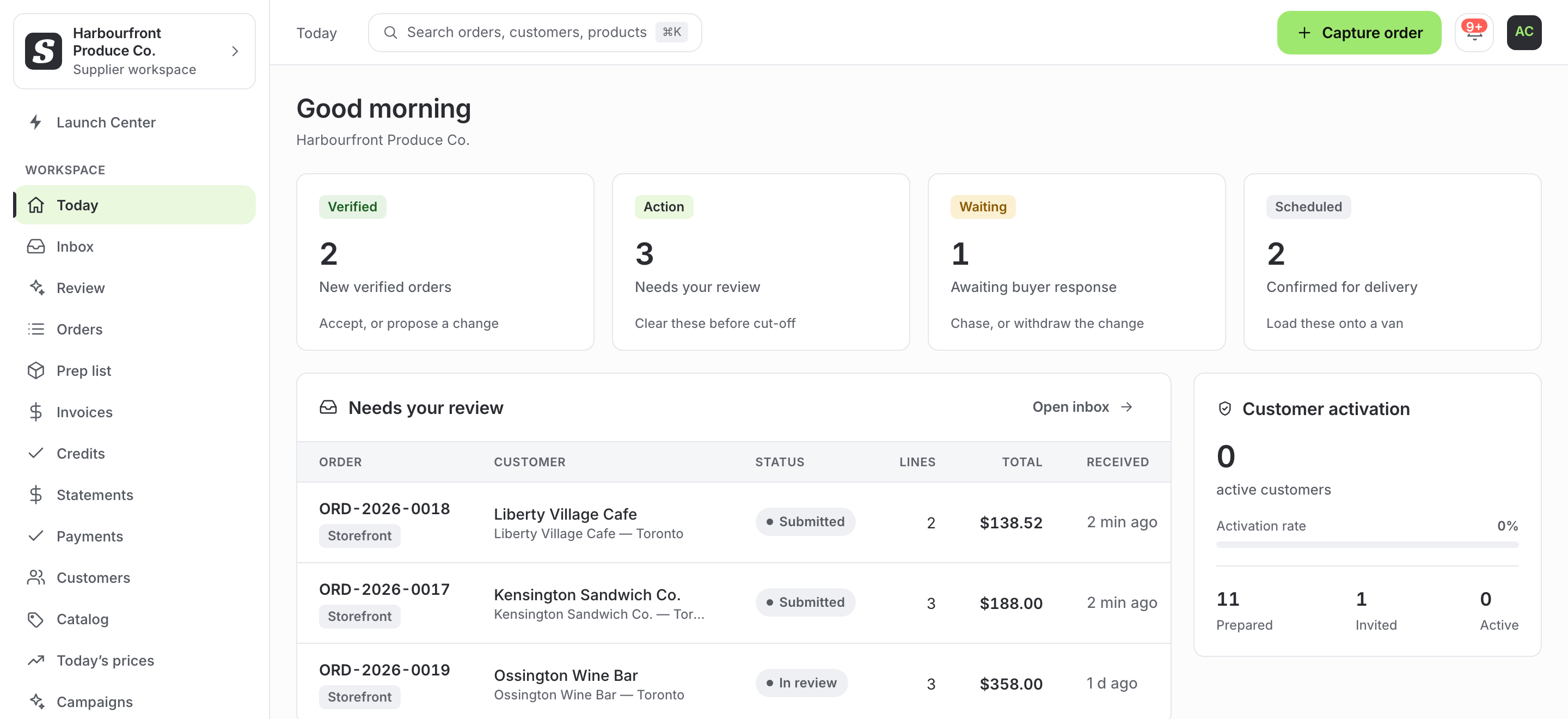
Your catalogue, every order channel, a storefront in your name, today’s prices, the trucks and the invoices. Your customers change nothing.
No commission · Your customers order free · Your prices stay yours
Catalogue
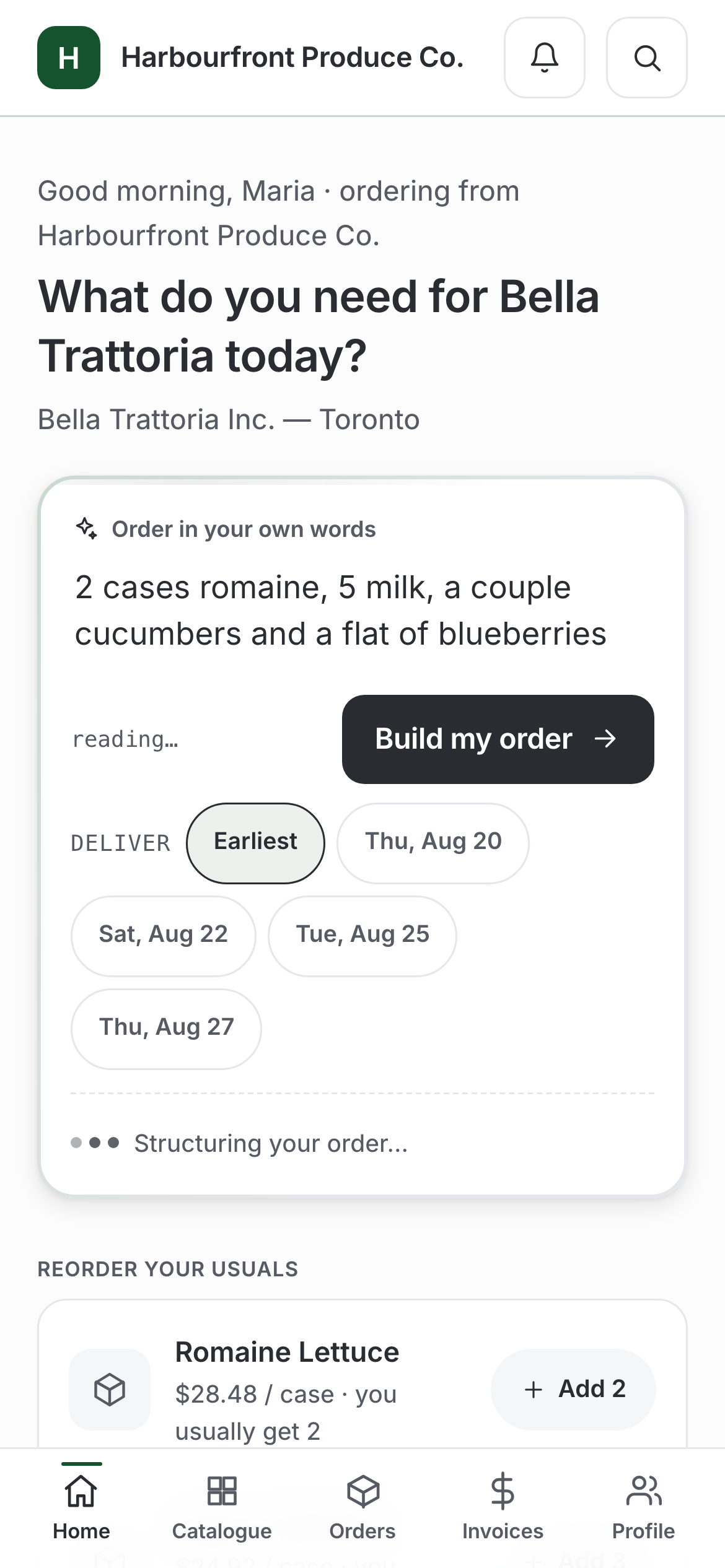
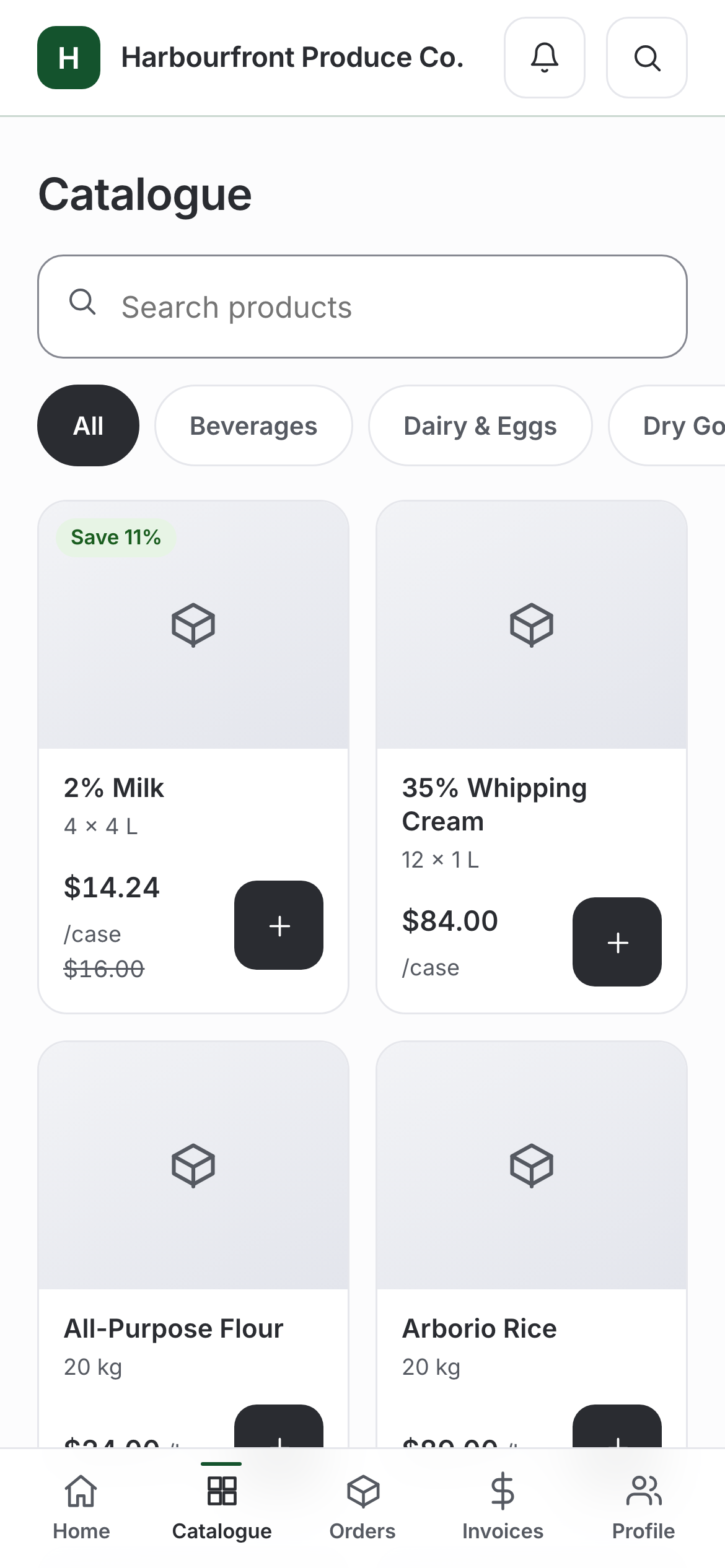
One catalogue. A price per customer.
Products, packs and units in one place — and the price each customer actually pays, not a discount you remember. Publish once; every channel prices from it.
- Per-customer price lists and volume breaks
- Catch-weight: ordered by the piece, billed by the kilo
- Stock that gates ordering when you run out
Every channel
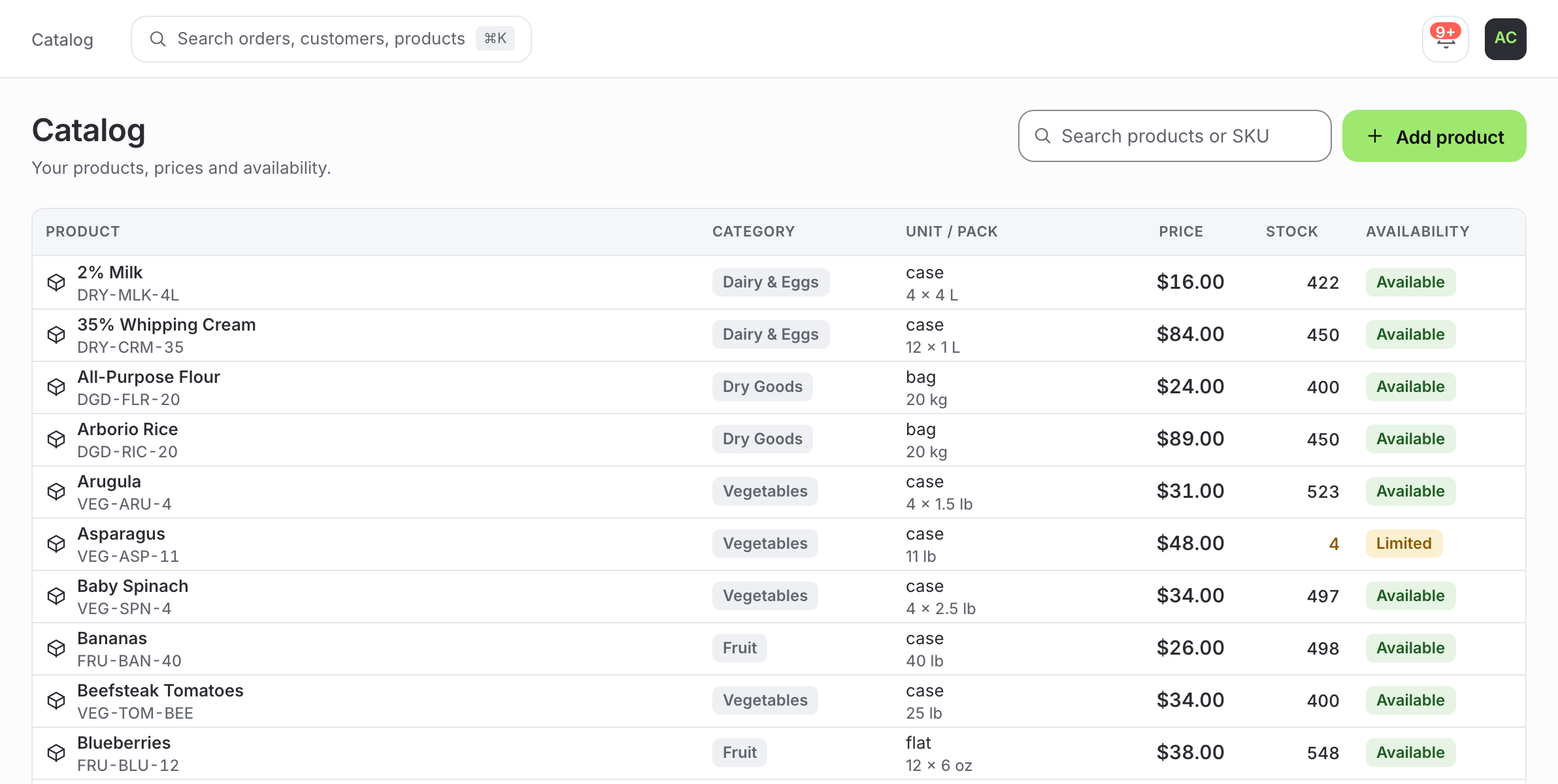
However they order, it lands in one queue.
A text, an email to your own ordering address, your storefront, or a call you type in — all four arrive priced, matched to your catalogue, waiting for the same Accept.
- Nobody signs up for anything, or installs anything
- Nicknames and “a couple” are read, and flagged when unsure
- Every correction teaches the matcher for that customer
Storefront
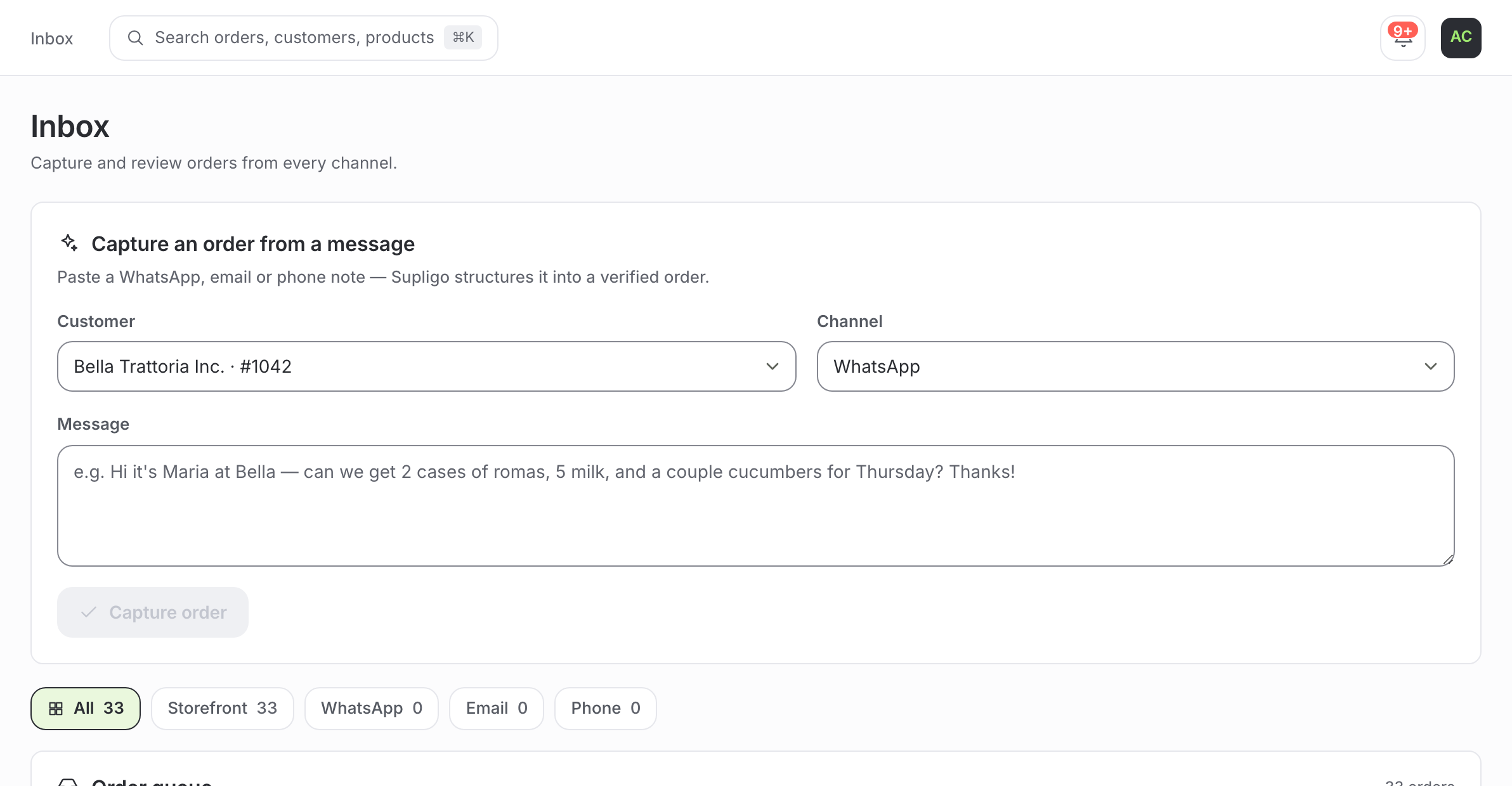
A shop in your name. Not a marketplace.
Your name, your colours, your own address. Each customer signs in and sees their own prices, their reorder list and their invoices — and no one else’s.
- Reorder in two taps from what they buy every week
- Order in plain words, on the phone in their hand
- Their prices and orders are separated at the database
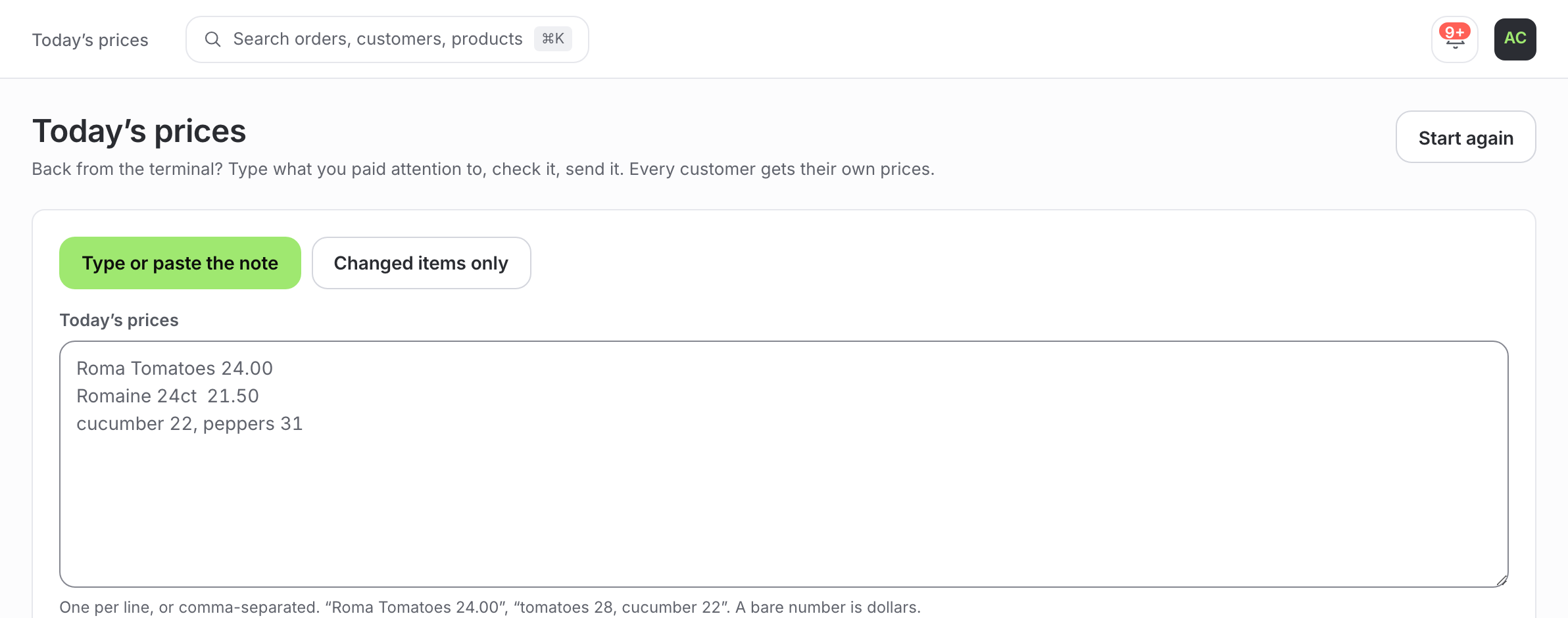
Today’s prices
Set the price once. Tell eighty-four customers.
One screen: old price, new price, and what it does to your margin. Then one action sends today’s list to every customer — in your name, from your address.
- Warns you when a price drops under your floor
- The price you publish is the price the invoice charges
- Open, preview, apply, sent: 5.1 s on a phone, timed
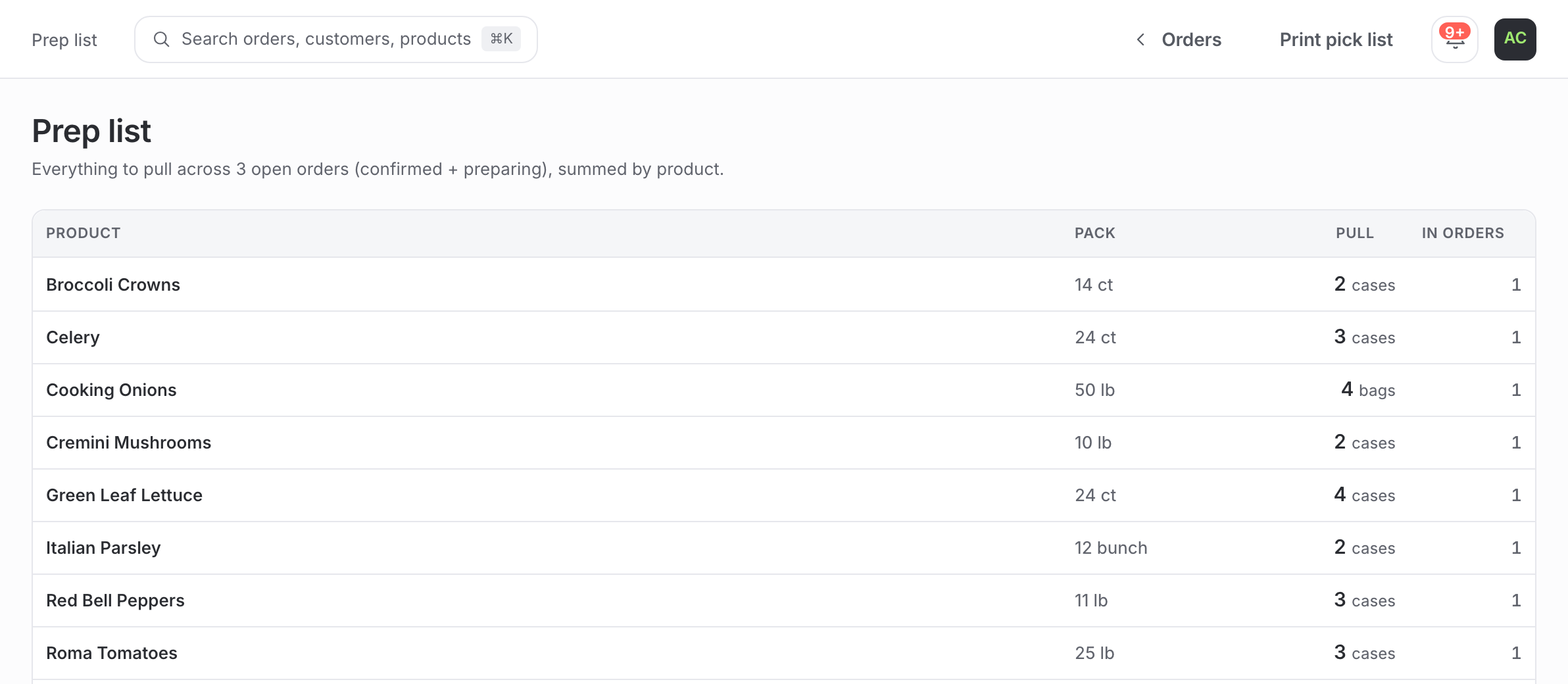
Warehouse & road
Picked, loaded, delivered — and proved.
Pick lists that gate on what is actually in stock, a short-ship that asks the customer before the truck loads, and a driver app that works with no signal at all.
- Proof of delivery: photo, time and place
- A tracking link that opens with no login
- 8 stops completed offline, none recorded twice
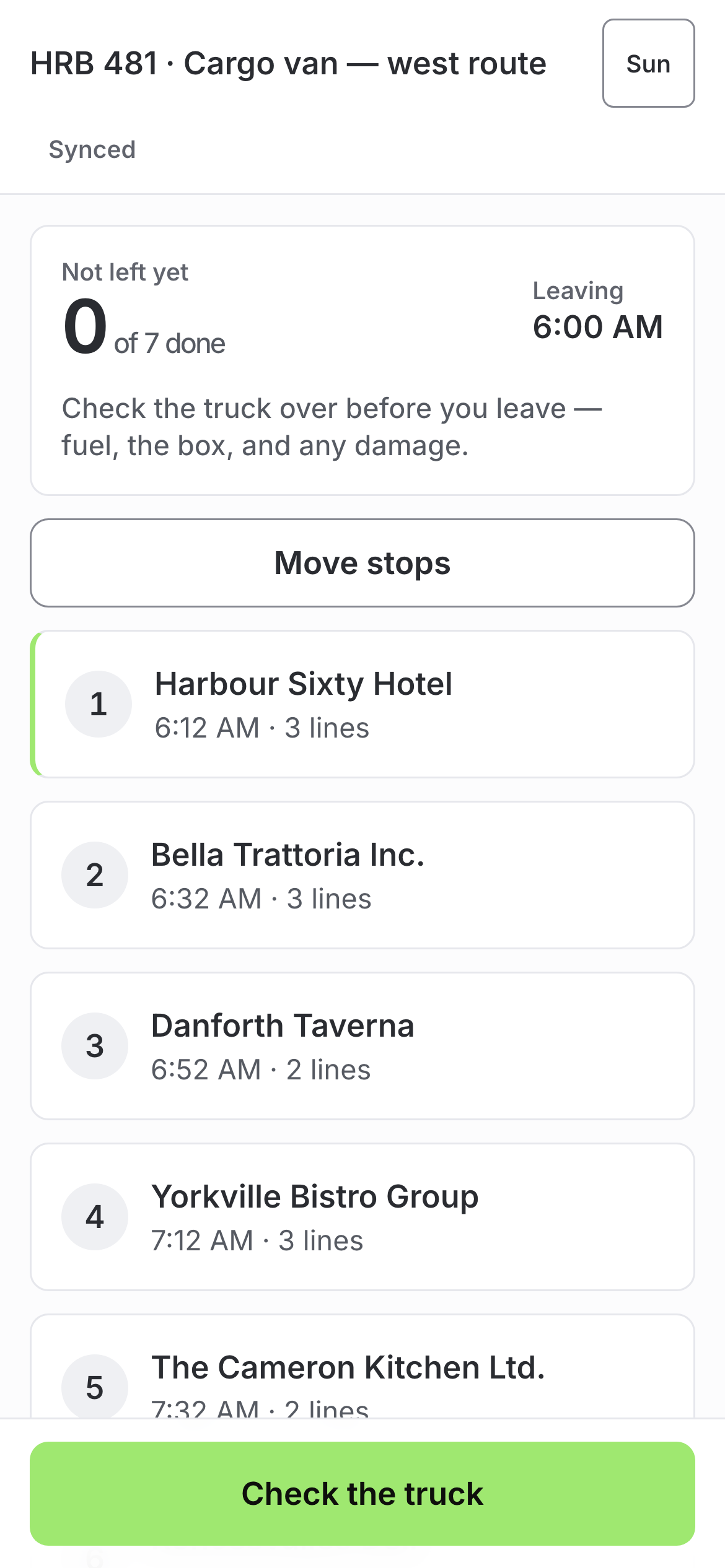
On the phone
The warehouse and the road, in your pocket.
One app for the people who never sit down. The picker packs from it, the driver runs his day on it, and neither of them needs a signal to finish the round.
- Works with no signal, then sends everything once
- Sunlight mode: black on white, thicker lines, bigger type
- Glove-sized targets, and the action always at thumb height
Invoices & money
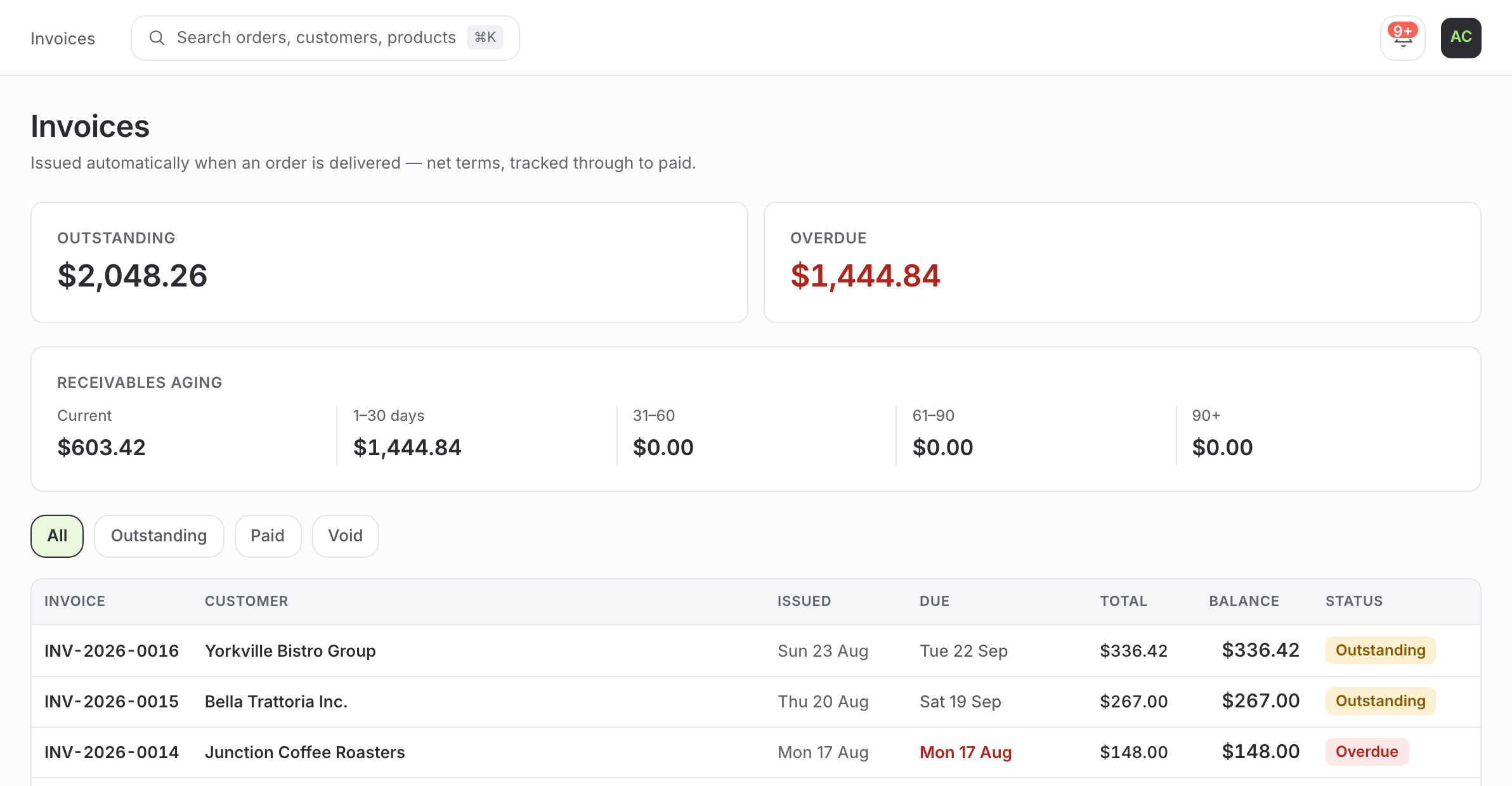
The invoice is right the first time.
It bills what came off the truck, not what was ordered — three minutes after the door closes, while the chef still remembers taking it in.
- $163.00ordered at 04:12
- +$1.60substitution she accepted
- −$15.00a case that never came off
- $149.60invoiced at 10:41
- Credit notes write themselves from the short case
- Statements, and who owes you money, on one screen
- GST/PST/HST split correctly, every province
It will never bill more than came off the truck — even though the other number would pay us both more.
Honestly
You’ve been sold software before.
Eleven things running, three under test, six not built. Here is the whole list.
Running 11
- Capture from a pasted message, or an email to your own ordering address
- The review queue and its gate — an unanswered line cannot be confirmed
- Learning: a correction teaches the matcher for you and for that customer
- Per-customer price lists, and today’s published list
- The order desk and the whole state machine, actor by actor
- Pick lists, catch-weight, short-ship and the credit that writes itself
- Vehicles, routes and the driver’s day — on a phone, offline
- Proof of delivery with photo, time and place
- The no-login tracking link and the receiving tick-off
- Invoices, statements, credit notes, and who owes you money
- Your customers’ data separated at the database, not by good intentions
Under test 3
- The line-match accuracy number, on a real supplier’s own year of orders
- The median seconds-per-review, recorded inside the product and published
- A full day in one warehouse, start to finish, before a second is signed
Not yet 6
- WhatsApp as a live inbound channel — today you paste it in
- Sending the shortage question out by email — today it lands on their order page
- Photographing a handwritten price docket, or reading a list out loud
- Taking payment — you invoice your customers exactly as you do now
- Billing you for a plan, and enforcing its bands — during the pilot nobody is charged
- French
What it costs
Three prices, printed.
Priced on the size of your business, not on how many people you put in it. Never a percentage — net margin in this trade is one to four. Nobody is charged during the pilot.
Starter
CA$199 / month
One van, a short list of regulars.
- Customers
- 25
- Vehicles
- 2
- AI-read orders
- 300 / month
Growth
CA$499 / month
Six trucks, eighty-four customers, a warehouse with a morning.
- Customers
- 150
- Vehicles
- 10
- AI-read orders
- 1,500 / month
Scale
CA$999 / month
More than one depot, and a bookkeeper who wants it all in one place.
- Customers
- Unlimited
- Vehicles
- Unlimited
- AI-read orders
- 5,000 / month
Every channel, and the review queue
Your storefront, on your own address
The whole warehouse and driver app
Invoices, credits and statements
Unlimited people on every plan
Your data, separated at the database
The questions you’d have to book a call to ask.
- Do my customers have to sign up for anything, or install anything?
- No. They text you as they always have, they email an address like [email protected], or they tap through a storefront in your name. The tracking link opens with no login, on the phone already in their hand.
- Do you take a percentage of my sales?
- Never. A monthly fee from you — no commission, no fee per order, no payment rail taking a slice. You invoice your customers exactly as you do today.
- Does it work with WhatsApp?
- Today you paste the message in and it comes back priced in about a second. WhatsApp as a live inbound channel is in the Not yet list above, and nowhere else on this page in any other tense.
- What happens when it gets a line wrong?
- It flags the line rather than guessing, and an unanswered line cannot be confirmed. Your correction teaches the matcher for that customer, so the same phrase does not ask again.
- What about tax?
- In Ontario it is one line; in Québec two, going to two governments on two returns — so both are stored rather than worked back out of a total at year end. Every province is handled.
- Can another supplier see my prices or my customers?
- No. Your customers, prices and orders are separated in the database and the filter is enforced on every query, so a bug in one screen still cannot show another distributor’s list.
There is no quote here yet, and we are not going to invent one.
We are choosing our first Toronto distributors now. Until one of them puts his name here, this space stays empty — which tells you something too.
Bring your catalogue. Put one real Tuesday through it.
Import your catalogue, invite one customer, take a real order from a real message. It takes an afternoon, and it is the only test that means anything.
Canada · Produce, meat & seafood, dairy, bakery, dry goods, beverage, packaging